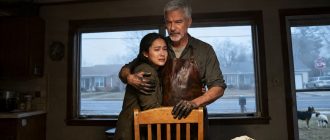
A year after my husband died, I sold his car. Under the trunk floor, I found a hidden phone and hotel receipts
I sold my husband’s car thirteen months after his funeral.
For a year, it sat in the garage exactly as Peter had left it — muddy mats, a pine air freshener, a half-empty packet of mints in the glove box. I couldn’t drive it. I couldn’t clean it. I could barely look at it.
Peter died suddenly. A stroke in the middle of the night. By the time the ambulance reached our house outside York, he was gone. We had been married thirty-two years.
After his death, I did what widows do. I signed papers. Accepted casseroles. Answered phone calls. Went to the cemetery. Cooked meals too large for one person. Our daughter called from Manchester every Sunday. Our son came by to fix things that didn’t need fixing, just so he could sit with me for a while.
The garage remained untouched.
Until one April morning, I decided the car had to go.
The buyer was a man in a leather jacket. He checked the engine, the tyres, the service history. Then he lifted the floor of the boot to inspect the spare wheel.
“There’s something here,” he said.
He pulled out a grey plastic bag tied in a knot.
“Your husband must have forgotten it.”
I took it, but I didn’t open it in front of him. Something in me knew not to.
After the car disappeared down the road, I went into the kitchen and untied the bag.
An old Samsung phone. A charger. Four hotel receipts from a small inn in Whitby.
July. September. Early October. Late October.
The last receipt was from six days before Peter died.
Single room. Two nights. Paid in cash.
I sat down slowly.
In July, Peter had said he was helping a friend with a boat. In September, he said there was an issue at the workshop. In October, he claimed he might stay overnight near Leeds because the drive back would be too much.
Whitby was not Leeds.
I plugged in the phone. When it finally switched on, the cracked screen glowed weakly. No passcode.
There was one contact: K. Workshop.
The messages were short.
“She asked again if she can call you Dad.”
“You need to tell Margaret.”
“Peter, we are running out of time.”
Dad.
That one word made the room tilt.
I called the number.
A woman answered.
“This is Margaret Hale,” I said. “Peter’s wife.”
The silence on the other end was long enough to tell me she knew who I was.
“My name is Katherine,” she said. “I’m sorry.”
We met two days later in a café near the station. I went prepared to hate her. I expected a younger woman, perfume, lies, an affair I could understand cleanly.
Katherine was my age. Grey at the temples. Tired eyes. Hands that trembled around her tea.
“I wasn’t his lover,” she said. “Not during your marriage. I knew Peter before you.”
She told me about a summer more than thirty years earlier. A relationship that ended badly. A pregnancy Peter never knew about. Letters that had been hidden by her parents because they thought he was unsuitable. A daughter raised without a father.
Her name was Caroline.
Caroline found the letters after her grandmother died. She searched for Peter. She found him a year before his death.
“He didn’t believe it at first,” Katherine said. “Then he saw her. She has his hands. He cried.”
“And he didn’t tell me.”
“No.”
The honesty hurt more than an excuse would have.
I met Caroline a week later.
She was thirty-three and had Peter’s smile. She came with a little girl who carried a wooden horse.
“Granddad Peter made it,” the child said.
Peter used to make wooden toys for our children. Lopsided, over-sanded, perfect.
I had to leave the table.
Caroline waited until I came back.
“I don’t want anything from you,” she said. “No money. No inheritance. No place if you can’t give it. I just spent my life thinking my father didn’t want me. Then I found out he never knew I existed.”
I wanted to stay angry.
Part of me still was.
Peter had lied. He had hidden a phone. Hidden hotel stays. Hidden a daughter. His fear had left me to discover the truth alone, through receipts in a plastic bag.
But Caroline had not betrayed me.
She had been betrayed by the same silence.
Telling our children was terrible. Our son, Daniel, shouted. Our daughter, Lucy, cried until her face went pale.
“Dad lied to us,” Daniel said.
“Yes,” I answered. “He did.”
I did not defend him.
But after weeks passed, they agreed to meet Caroline. It was awkward and painful. No one knew where to look. Then Caroline laughed at something Lucy said, and the sound was so much like Peter that all of us froze.
“That’s his laugh,” Lucy whispered.
At the cemetery, Caroline stood back from the grave.
“I don’t know if I have the right,” she said.
Daniel, who had been the angriest, looked at her for a long moment.
“If we have the right to be angry with him,” he said, “you have the right to stand here too.”
The little girl placed the wooden horse beside the flowers.
“For Granddad,” she said.
And that was when I cried properly — not as a betrayed wife, not as a widow, but as a woman standing in the wreckage of a truth that had hurt everyone differently.
I have not fully forgiven Peter. Perhaps I never will. Some questions cannot be answered by a gravestone.
But I have learned that love and anger can live in the same heart. So can grief and mercy. So can betrayal and the decision not to punish the innocent for a dead man’s fear.
The phone is still in a box in my wardrobe with the hotel receipts.
I keep it not because I want to suffer again, but because it reminds me that truth does not vanish just because someone hides it well.
Sometimes it waits under the floor of a boot.
Sometimes it arrives too late.
And sometimes, if we are brave enough, it becomes not only the thing that breaks us — but the thing that teaches us how much room the heart can make after it has been broken.