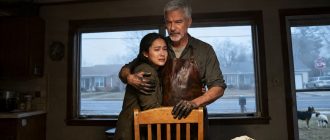
My brother called right after our father’s funeral: “We need to talk about the house.” Then he arrived with papers and a pen
My brother called three days after our father’s funeral.
He didn’t ask if I had slept. He didn’t ask if I had eaten. He didn’t ask how it felt to sit in the kitchen with Dad’s chair empty and his favorite mug still beside the sink.
He only said:
“Clara, we need to talk about the house.”
I was sitting at the old wooden table in the house outside Asheville, the one Dad had built with his own hands over the course of thirty years. His oatmeal bowl was still on the drying rack. I had washed it that morning, but I couldn’t bring myself to put it away. It felt too final.
“What house?” I asked, though I knew.
“The one you’re living in,” Daniel said. “We need to settle the estate.”
He had that corporate voice he used when he wanted something to sound reasonable before it became cruel. Daniel lived in Charlotte, managed operations for a shipping company, and sometimes forgot that family members were not employees.
He arrived on Friday with his wife.
I hadn’t known Melissa was coming. She stepped out of their SUV and immediately looked around the property. The new windows. The repaired porch. The stone fireplace Dad had finished two summers before his health failed. Her eyes didn’t hold grief. They held appraisal.
“It’s nicer than I expected,” she said.
Daniel placed a folder on the kitchen table.
Printed papers. A legal header. My name in the third paragraph.
Then he set down a pen.
“Read it,” he said. “It’s simple. You sign over your share of the inheritance to me. In return, I won’t ask for compensation for all the years you lived here rent-free.”
Rent-free.
The word landed like a slap.
“Rent-free?” I repeated.
“Clara, come on. You didn’t pay rent. You didn’t pay a mortgage. Dad let you stay after your divorce. Meanwhile, I was paying for my own house in Charlotte.”
Melissa folded her hands.
“It’s not personal. It’s just fair.”
Fair.
I wanted to laugh, but my throat burned.
Dad started building that house before I was born. He worked construction by day and came home to lay tile, cut boards, pour concrete, fix what he couldn’t afford to hire out. After Mom died, he kept going alone.
When my marriage fell apart, I came back with my son, a sewing machine, and two suitcases. Dad opened the door and said:
“Your room’s still yours.”
No questions. No shame. No conditions.
For fourteen years, I lived under that roof with him. I cooked his meals, drove him to doctors, sorted medications, changed sheets, helped him shower after his second stroke, sat beside him through nights when his chest hurt and he was too proud to say he was scared. I worked from home sewing alterations until midnight just to cover bills.
Daniel came for Christmas. Sometimes Thanksgiving. He stayed two days, complained about the drive, and left before anything difficult needed doing.
“Dad built this house for me,” I said. “He said it in front of people.”
Daniel’s jaw tightened.
“He may have said it, but he didn’t write it down. The law is clear. Half is mine. Either you buy me out, or you sign.”
I looked at the pen.
For one terrifying second, I understood how people sign away their lives. Not because they agree. Because they are tired. Because pressure in a familiar voice can feel like fate.
Then someone knocked.
Mrs. Whitaker from next door stepped in with a casserole dish. She had known Dad for forty years. She saw the papers and stopped.
“Daniel,” she said quietly, “please tell me you didn’t bring those here today.”
“This is a family matter.”
“It became my matter the day your father asked me to witness something.”
Daniel froze.
“What are you talking about?”
She reached into her coat pocket and pulled out a brown envelope.
My name was written on it in Dad’s shaky handwriting.
Inside was a note: “Call Attorney Ellen Brooks.”
I called immediately.
Ellen arrived the next morning. She sat at our kitchen table and opened a blue folder.
“Your father, Robert Miller, executed a valid will eight months before his death,” she said. “The house is left to Clara Miller. Daniel Miller is left the savings account and the small parcel of land by the creek.”
Daniel stood up.
“That’s impossible. Dad was sick.”
“He was ill,” Ellen said, “not incompetent. A physician signed a capacity statement. Your father also left letters.”
She handed mine to me.
Dad’s handwriting shook across the page.
“Clara, if you are reading this, your brother has probably called your years of care ‘free rent.’ Don’t believe him. You paid for this house in ways no receipt can show. You paid with sleepless nights, patience, meals, medicine schedules, and the dignity you gave me when my body stopped obeying me. I built this house with my hands, but you turned it back into a home when I needed one most.”
I covered my mouth and sobbed.
Daniel stared at the table.
Ellen handed him a second letter.
He didn’t read it aloud. But as his eyes moved across the page, something in his face changed. Anger faded into something smaller. Shame, maybe.
Finally, he whispered:
“He said I shouldn’t ask for half of a home I only visited.”
No one spoke.
Melissa looked away.
Daniel gathered the papers he had brought. He didn’t ask me to sign. He didn’t threaten court. He left with the folder under his arm and Dad’s letter folded in his hand.
For weeks, I didn’t hear from him.
Then one Sunday, he came alone. No Melissa. No legal papers. He stood on the porch holding a box of old photographs.
“I read his letter a hundred times,” he said.
I said nothing.
“I thought you had it easy because you had a place to land.”
“I landed here,” I said, “and then I stayed when staying became hard.”
He nodded.
“I didn’t see that.”
“You didn’t want to.”
He swallowed.
“No. I didn’t.”
He didn’t give me some grand apology. Daniel was never good at that. But he spent the afternoon fixing the loose railing Dad had been worried about. Before he left, he asked if he could take Dad’s old pocketknife from the workshop.
I said yes.
Today, I still live in the house. My son is grown now, but he comes by on Sundays. Dad’s mug is finally in the cabinet, though sometimes I take it out and fill it with flowers from the garden.
I think often about the phrase my brother used.
Rent-free.
People who never provide care often think care costs nothing. But care has a price. It costs sleep. It costs time. It costs your back, your plans, your privacy, your heart breaking slowly as the person who raised you becomes someone you must help raise from a chair.
Dad knew what I paid.
And before he left, he made sure no one could reduce my love to unpaid rent.
He did not leave me the house because I was his favorite.
He left it to me because I was the one who stayed when the house stopped being easy to live in — and became a place where love had work clothes on.