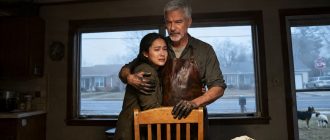
My mother-in-law offered to pay for the surgery that might make my husband walk again — but only if he divorced me
My husband, Nicholas, has been in a wheelchair for fourteen months.
A drunk driver hit him three blocks from our home. One moment he was texting me that he was bringing dinner, and the next there were sirens, broken glass, and a doctor explaining that my husband might never walk again.
Before the accident, Nicholas never sat still. He fixed loose shelves, carried groceries for elderly neighbors, danced badly in the kitchen, and ran up stairs two at a time. After the accident, there were days when reaching a glass of water felt like a mountain.
Our life became medication schedules, insurance calls, physical therapy, shower chairs, medical bills, and nights when he stared at the ceiling because pain would not let him sleep.
More than once, he said:
“You didn’t sign up for this, Elena.”
And every time I answered:
“I signed up for you.”
Then came the surgery.
A new procedure overseas. Risky, expensive, not a miracle, but a real possibility. His specialist said there was a chance Nicholas could regain enough function to stand, maybe even walk short distances.
The cost was around eighty thousand euros.
We did not have that kind of money.
His mother did.
Vivian had never liked me. From the first day, I was not good enough for her son. My family was too ordinary. My job too modest. My laugh too loud. My clothes too simple. She had always believed Nicholas deserved someone “suitable.”
After the accident, she visited rarely, but when she did, she inspected everything.
“The medications should be arranged differently.”
“He needs better care.”
“If he lived with me, things would be handled properly.”
Last Sunday, she came without calling.
She sat at our kitchen table as though it belonged to her, placed an envelope in front of Nicholas, and said:
“Eighty thousand euros. The money can be transferred Monday morning.”
My heart stopped.
Nicholas did not touch the envelope.
“What’s the condition?”
For the first time in months, Vivian smiled.
“You divorce her,” she said calmly. “Cleanly. Completely. After the operation, you can start over. The right way. With the right woman beside you.”
I stood in the hallway holding a stack of towels. I could not move.
I waited for him to choose me.
Instead, I heard his voice.
Calm.
Steady.
“All right, Mother,” he said. “I’ll do it.”
The towels slipped from my hands.
I did not sleep that night. I lay beside the man whose body I had lifted, washed, dressed, comforted, and defended for over a year. The man whose shame I had held gently. The man whose anger I had survived because I knew it was grief wearing another face.
And he had sold me for a chance to walk.
In the morning, he asked me to listen.
“Elena, please.”
“I heard enough.”
“No,” he said. “You heard what she was supposed to hear.”
He placed his phone on the table.
He had recorded everything.
The conversation. The offer. The condition. He showed me messages from Vivian, and an email to an attorney sent minutes after she left.
“I said yes because I needed her to believe she had won,” he said. “I needed her in court.”
“In court?”
“Yes. But not for a divorce.”
Vivian spent the next few days celebrating. She called friends. She told relatives she was finally “putting Nicholas’s life back in order.” She said that once he could walk again, he would understand.
Nicholas asked only one thing of her.
“Be present at the divorce hearing,” he said. “I want everything formal.”
She agreed immediately.
She walked into the courtroom wearing a cream suit, pearls, and the expression of a woman who had purchased a victory.
I sat beside our lawyer with cold hands.
Nicholas sat in his wheelchair, pale but upright.
When the judge asked whether both parties wished to proceed with the divorce, Nicholas lifted his head.
“Your Honor,” he said, “I do not want a divorce. I love my wife. I am here to place on record that my mother attempted to condition payment for a medically necessary surgery on the destruction of my marriage.”
Vivian froze.
“Nicholas,” she hissed.
The judge ordered silence.
Our lawyer played the recording.
Vivian’s voice filled the room.
“You divorce her. I will not pay eighty thousand euros so you can walk back into the same mistake. She is not your future.”
I felt the words hit me all over again.
Then Nicholas spoke.
“My wife is not the reason I cannot walk. She is the reason I still wanted to live when I could not stand. She bathed me when I hated my body. She took me to therapy. She fought insurance. She slept in chairs. She held me through pain I was ashamed to show anyone else.”
His voice broke, but he did not stop.
“If walking again means stepping over her heart, then the price is too high.”
The courtroom was silent.
Vivian began to cry.
At first, I thought it was humiliation. Maybe it was. But when Nicholas turned to her, her face had changed.
“I wanted to save you,” she whispered.
“No,” he said. “You wanted to own me. Elena saved me long before money entered the room.”
The case did not proceed. The judge dismissed the divorce petition when Nicholas made clear there was no intent to dissolve the marriage, and our attorney submitted the evidence for the appropriate record. It was not dramatic in the way movies are dramatic.
It was better.
It was true.
Our story spread through friends, then through Nicholas’s physical therapist, who wrote about it without names. People donated. Small amounts. Large ones. A clinic agreed to partial assistance. And Vivian eventually transferred money too.
Without conditions.
Nicholas accepted it only after she signed a legal statement that it was a medical gift, not a contract granting her power over our marriage.
The operation lasted hours.
Rehabilitation lasted longer.
The first time Nicholas stood between parallel bars, I thought my chest would break. His whole body trembled. Sweat ran down his face. The therapist told him to try one step.
Nicholas looked at me.
“I’m not walking away from you,” he whispered. “I’m walking toward you.”
He took three steps.
Three painful, shaking, impossible steps.
Vivian stood by the door, crying quietly. She did not rush forward. She did not make the moment about herself. She simply watched the woman she had tried to erase become the person her son walked toward.
We are not magically close now. Trust does not heal because someone writes a check or sheds tears. But Vivian calls before visiting. She says my name. She thanks me.
Sometimes that is enough for one day.
Nicholas still uses the chair often. Some days he walks with a cane. Some days he cannot. Recovery is not a straight line.
But I know this:
The first real step my husband took was not in the rehabilitation room.
It was in that courtroom, when he chose our marriage before he ever stood on his feet again.