
I’m 88 years old. My name is Walter, and I live in a single room at the Silver Pines Assisted Living Facility just outside of Wichita, Kansas. The room is fourteen feet by twelve. I measured it once, back when I first arrived and still had the urge to know the exact dimensions of the space I was disappearing into.
There was a time when my house never got quiet. Not for a minute.
It was a split-level rancher on Elm Street, with a porch that sagged in the middle and a screen door that slammed like a gunshot every time one of the kids burst through it. I had five daughters. Five. The pantry was a war zone. The upstairs bathroom had a permanent line three deep every morning. My wife, Carol, would stand at the bottom of the stairs and yell, "If you're not down here in sixty seconds, I'm feeding your pancakes to the dog!" We didn't even have a dog.
On Sundays, the whole clan would pile in. Sons-in-law, grandkids, babies in carriers, a cousin or two who had nowhere else to go. I'd grill burgers in the backyard even if it was drizzling. The kitchen table wasn't big enough, so we'd push two folding tables against it and throw a mismatched tablecloth over the whole mess. I'd sit at the head, grease still on my fingers from the spatula, and I'd look down that long, crooked line of faces and think, *This is it. This is the whole point.*
I figured it would last forever. You don't think about the silence that's coming. You don't hear it sneaking up on you between the ringing phone calls that get shorter and the holiday invitations that start to drift to your kids' in-laws instead of your own house.
Now I have a bed with a metal railing. A vinyl recliner that wheezes when I lean back. A window that looks out onto a parking lot and a dumpster that gets emptied every Tuesday at 5:45 in the morning. I know the time because I'm always awake.
On the nightstand, I keep three photographs. One of Carol, taken at the state fair in '87, her hair all windblown and a wisp of cotton candy stuck to her sleeve. One of all five girls lined up on the front steps in their Easter dresses, the youngest one crying about her shoes. And one of me holding my first grandchild, a wrinkled little red thing wrapped in a hospital blanket, my hands looking enormous and terrified underneath her.
Those pictures are the only ones in this building who know my name. The only ones who don't leave.
There are twenty-three grandkids now. Seven great-grandkids. I've met four of them, and only because my oldest daughter, Renee, drove them out here once when the baby was six weeks old. She stayed for forty minutes. She kept checking her phone, apologizing about traffic on the way back to Kansas City.
My second daughter, Michelle, calls every other Sunday. The conversations last seven minutes on average. I know because I watch the clock on the cable box, the red digits flickering through the afternoon. She talks about the weather, her garden, the new deck they're putting on the back of the house. She doesn't ask about my day. There's nothing to ask about.
My fourth daughter, Jennifer, flies in from Phoenix once a year, usually around Christmas, if the flights aren't too expensive. She brings a poinsettia, kisses my forehead, and spends the rest of the visit in the corner of the room answering emails on her phone. She talks to me like I'm already a memory, like she's doing her duty by a ghost.
And my youngest, my baby girl, the one who cried about the shoes? Her name was Susanna. We called her Sunny because she walked into a room and everything lit up. I haven't heard her voice in three years. Not a call. Not a card. Nothing. I've lain awake in the dark more nights than I can count, replaying every argument we ever had, every word I said that might have been too sharp, every promise I broke without knowing it. I don't have an answer. Maybe I stopped being able to hear the truth a long time ago.
I used to work with my hands. Forty-one years at the John Deere plant, running a lathe, then coming home and fixing whatever was broken. I built a treehouse in the backyard with a trapdoor and a rope ladder. I carved little wooden animals for each kid's stocking at Christmas, painting the eyes with a toothpick. My fingers could take a block of scrap pine and turn it into something that mattered.
Now I can barely grip a pen. The arthritis came on slow, then all at once. I do the jigsaw puzzles the activities coordinator leaves on the common room table. The ones with five hundred pieces, big chunky shapes they market to seniors and toddlers. *Easy-grip puzzles for aging minds.* I sit there for an hour, fitting together a picture of a barn in Vermont, and I pretend it's enough to keep the rust from spreading.
But the hardest part — and I need you to hear this — isn't the joints. It isn't the weakness. It isn't watching your own hands turn into claws in your lap.
The hardest part is 8:30 p.m., when the last fluorescent light in the hallway flicks off, and the building settles into its bones, and you realize nobody came. Not today. Not yesterday. And not tomorrow, almost certainly. You lie there in the dark with the hum of the heater and the distant beeping of some machine down the hall, and you think about all the nights you sat up with a sick child, a hand on her back, whispering, "It's okay, baby, Daddy's here." You think about the overtime shifts, the missed sleep, the vacation fund you drained so one of them could go to college. You gave without a calculator, without a second thought, because they were the reason the sun came up.
And now you're here. And the sun still comes up. But it comes up over a parking lot and a dumpster, and the only person who says your name in the morning is a man named Derek who wears blue scrubs and checks your blood pressure.
Derek is 34. He's got a tattoo of an eagle on his forearm and he calls me "Mr. Walt." Every morning at 7:15, he knocks twice, pushes the door open, and says, "How we doing today, Mr. Walt?" He takes my arm, pumps the cuff, writes down numbers on a clipboard. He straightens my blankets, opens the blinds, asks if I slept okay. He does this every single day. He does it for thirty rooms on this floor. And it's more than some people who share my blood have done in a decade.
I don't say that to be bitter. I'm not bitter. I'm just tired.
Last month, a man named Frank died two doors down. I used to see him in the common room, working the same endless jigsaw puzzle of the Vermont barn. We'd talk about baseball. The Royals' bullpen, mostly. He'd been a truck driver, had a son in Omaha who never visited. One morning, Derek went into Frank's room and came out five minutes later with his jaw tight. The gurney arrived an hour later. The room was empty by noon. By the next day, there was a new resident in 204, a woman with a walker and a stack of romance novels. Nobody talked about Frank again. It was like he'd been erased from the ledger.
That's the thing about this place. You learn not to get too attached. People leave. Suddenly. In the space of a single breath, a single night. A bed is stripped, a name is taken off the door, and the world keeps spinning.
They tell you people are living longer now. Medicine, technology, all the marvels of the modern age. But nobody tells you what it *means* to live longer when you're doing it alone. When your mind still works well enough to remember everything — every laugh around that crooked dinner table, every July Fourth sparkler, every time you lifted a crying child onto your shoulders and said, "Look up, sweetheart. The whole sky's on fire just for you." You remember it all, sharp as a splinter, but it's gone. It's not coming back.
And then, sometimes, the phone rings.
It was a Thursday, a little after two in the afternoon. I was halfway through a crossword puzzle, stuck on 14-down, a six-letter word for "perseverance." The phone on my nightstand buzzed, and I nearly knocked over my water glass reaching for it.
"Dad?"
It was Sunny.
Her voice sounded raw, stretched thin, the way it used to sound when she was a teenager and had been crying in her room for an hour before she'd finally come out to talk.
"Sunny?" I said. My throat closed up on the second syllable.
"Yeah, Dad. It's me. I… I know it's been a long time."
"Three years," I said. Not accusing. Just stating the fact, putting it in the room so we could both look at it.
She was quiet for a moment. I heard a shaky breath on the other end of the line. "I know. I'm sorry. I didn't know how to call. I didn't know what to say."
I waited. The clock on the cable box ticked to 2:07.
"I'm in trouble, Dad," she said finally. "I'm really in trouble, and I didn't know who else to call."
Something inside my chest, something that had been curled up and dormant for years, uncoiled. It wasn't anger. It wasn't even hurt. It was an old, fierce reflex I thought I'd lost — the part of me that used to get out of bed at 3 a.m. when one of the girls had a nightmare. The part that didn't need to know the details before it started moving.
"Tell me," I said.
She told me. She was in Wichita. She'd been living there for almost a year, working at a diner off Kellogg Avenue, trying to get clean. There was a man involved — there's always a man in these stories — and he wasn't a good one. He'd taken her money, her car keys, her confidence. She'd finally gotten away from him two days ago, but she had nowhere to go and forty-three dollars in her pocket. She'd been sleeping in a bus station. She was scared.
She was my baby girl, and she was terrified, and she called *me*.
"You stay right where you are," I said. "Give me the address."
"Dad, you can't drive. You don't have a car. You're in a—"
"I said give me the address, Susanna."
She gave it to me. I wrote it on the margin of the crossword puzzle with a shaky hand.
Then I hung up, and I pressed the call button on the cord around my neck, and I waited.
When Derek came in, I was already standing, bracing myself on the nightstand. My knees were screaming. My hands were trembling. I was wearing slippers and a thin cotton robe over my pajamas, and I probably looked like a hundred years of bad decisions.
"Mr. Walt, what's going on? You shouldn't be up without—"
"Derek," I said. "I need you to listen to me. I need to get downtown. Right now."
"Mr. Walt, you know I can't just—"
"I have a daughter," I said, and my voice cracked, not from weakness but from something that felt almost like being alive again. "She's in trouble. She's sitting in a bus station on Douglas Avenue with nothing but the clothes on her back, and she hasn't called me in three years, and she called me *today.* Do you understand? She called *me.*"
Derek looked at me for a long moment. The eagle on his forearm flexed as he crossed his arms. Then he let out a slow breath and nodded.
"My shift ends in forty minutes," he said. "I'll drive you myself."
We walked down the hallway together, me shuffling in my slippers, Derek's hand hovering just behind my elbow, ready to catch me. The fluorescent lights buzzed overhead. A few residents in wheelchairs watched us pass with mild curiosity. Nobody tried to stop us. I think, on some level, everyone in that building understood.
The ride took twenty minutes. Derek's truck smelled like coffee and sawdust. He didn't ask questions. He just drove, one hand on the wheel, the other tapping along to a country station turned down low. Outside the window, Wichita rolled past in a blur of strip malls and leafless trees, gray November sky pressing down like a lid.
When we pulled up to the Greyhound station on Douglas, I saw her through the window. She was sitting on a plastic chair near the ticket counter, a duffel bag at her feet. She looked smaller than I remembered. Older, too, with lines around her eyes that didn't used to be there. Her hair was pulled back in a messy ponytail, and she was wearing a denim jacket that was too thin for the weather.
Derek helped me out of the truck. I gripped his arm like a crutch, and we walked through the automated doors into the station. The air inside was stale and warm, smelling of diesel and floor wax. A few travelers glanced up, then looked away.
Sunny saw me.
She stood up slowly, like she wasn't sure her legs would hold her. Her face crumpled, all the careful walls she'd built up over the years collapsing at once.
"Daddy," she whispered.
That word. That word I hadn't heard in so long. It hit me square in the chest, harder than any bad news, harder than any silence.
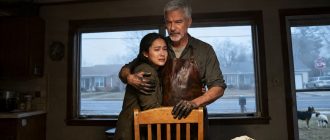
I let go of Derek's arm and took a step toward her. My legs were unsteady. My whole body was unsteady. But I took another step, and another, and then she was moving too, and we met in the middle of that grimy bus station under the flickering overhead lights.
She threw her arms around me and buried her face in my shoulder, and she sobbed. Not pretty crying, not the kind you see in movies. Ugly, heaving, broken sobs, the kind that have been dammed up for years.
"I'm sorry," she kept saying, over and over, muffled against my robe. "I'm so sorry, Daddy. I'm so sorry."
I held her. My arms remembered how. They'd never really forgotten. I held my baby girl in the middle of a Greyhound station on a cold Thursday afternoon, and I didn't say anything. I just let her cry.
After a while, she pulled back, wiping her nose on her sleeve. "I didn't think you'd come," she said.
"I'll always come," I said. "That's the job. It doesn't end."
Derek drove us back. Sunny sat in the back seat of the truck, her duffel bag on her lap, her forehead resting against the window. Nobody talked. Derek kept the country station low, and an old George Strait song filled the silence.
When we got back to Silver Pines, Derek helped me inside and said he'd give us some privacy. Before he left, he caught my eye.
"She can stay in the guest room on the first floor," he said quietly. "I'll square it with the front desk. Don't worry about it, Mr. Walt."
I nodded. I couldn't find the words.
Sunny and I sat in my room. She took the recliner. I sat on the edge of the bed. The vinyl wheezed under her weight. Outside, the sun was starting to go down, throwing long orange shadows across the parking lot.
"I have nightmares," she said quietly, staring at her hands. "Every night. About the things I did. The people I hurt. The way I just… disappeared."
I didn't tell her it was okay. It wasn't okay. Three years of silence isn't okay. But I reached over and took her hand, my gnarled fingers wrapping around hers, and I held it.
"Tell me about the nightmares," I said.
She looked up at me, surprised. "What?"
"Tell me. All of them. We've got time."
She hesitated. And then, slowly, haltingly, she started to talk. About the man who'd taken her money and her keys. About the nights she'd spent in shelters and parking lots. About the shame that had kept her from dialing my number for three years, because she didn't think she deserved to be my daughter anymore.
I listened. I listened the way I used to listen when she was ten years old and telling me an impossibly long story about her day at school. I listened until the sun went down completely and the parking lot lights flickered on outside the window. I listened until her voice went hoarse and the tears dried on her cheeks and she finally, finally ran out of words.
Then, in the quiet that followed, I said, "You're here now. That's what matters. Tomorrow, we'll figure out the rest. Tonight, you just sleep."
She slept in the recliner that night, a blanket pulled up to her chin. I lay in my bed, watching the ceiling, listening to her breathe. It was the first night in three years I didn't cry. The silence was still there, but it was different now. It wasn't empty anymore.
The next morning, Derek knocked twice and pushed the door open. He saw Sunny curled up in the recliner, still asleep, her duffel bag open on the floor with a few clothes spilling out. He looked at me, and he smiled.
"How you doing today, Mr. Walt?"
I looked at my daughter. Her face was peaceful, relaxed in a way it hadn't been when I found her in that bus station. The lines around her eyes were still there, but they didn't seem as deep.
"I'm doing just fine, Derek," I said. "Just fine."