
Linda realized her daughter was actually leaving when she saw the box of coffee mugs. Emma had never cared about dishes—she drank from a souvenir cup with a faded Minnie Mouse at forty degrees, dropped plates without flinching, and once used a salad bowl for cereal because the dishwasher hadn’t been run. But that morning, every single mug sat wrapped in newspaper and tucked into a cardboard box like a set of fragile eggs. Even the chipped one from their trip to the Grand Canyon, the one Linda had been begging her to toss for years.
Boxes covered every inch of the living room floor in Emma’s apartment. At thirty-four, she was moving from Des Moines to Minneapolis for a senior architect position at a firm downtown. She’d found a studio near Loring Park, close enough to bike to work. Linda understood—adult daughters sometimes relocated. But understanding didn’t stop her from showing up with a fire extinguisher, a laminated card of emergency numbers, a rain poncho, and a folder with printed directions to three different urgent care clinics. She’d already pulled up the building on Google Street View and discovered the ground-floor deli had a string of health code violations. She told Emma to avoid the turkey wraps.
Emma at first said thank you. Then her answers got shorter. By late afternoon, she took the packing tape from her mother’s hand and said, gently, “Mom, can you just sit for a bit?”
Linda sat on a sealed box labeled *Shoes/Coats*. Sitting without doing felt like holding her breath. She watched Emma seal another carton and mentally catalogued every mistake: books packed too tight, hair dryer tossed in with winter boots, no “FRAGILE” written on the box of dishes. She bit the inside of her cheek.
“You’ll call every night, right?” Linda finally asked.
Emma didn’t look up right away. She smoothed a strip of tape and said she’d call, but not every night. The new job would mean late hours, and she needed space to settle in, meet people, figure out the neighborhood without reporting back after every grocery run. Linda felt each word like a small door closing.
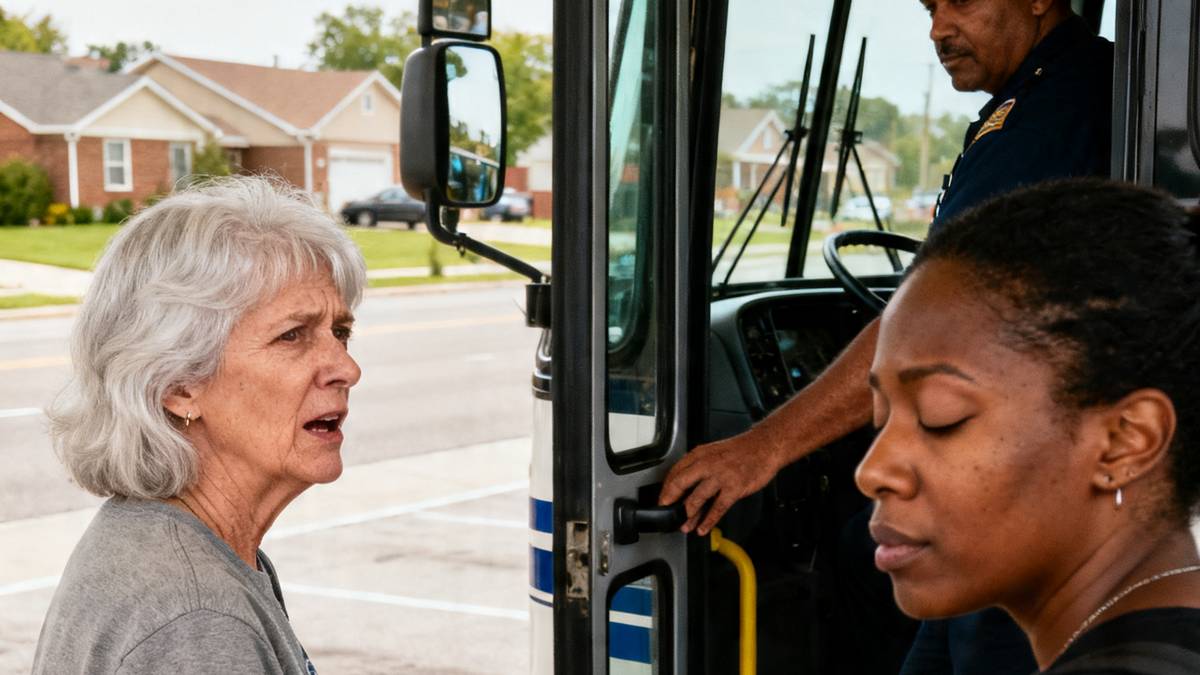
At the Greyhound station three days later, Linda checked the ticket four times. She asked the driver when the rest stop was and if the bus had Wi-Fi that actually worked. She told Emma not to accept snacks from seatmates, as if her daughter were ten years old heading to summer camp and not a grown woman taking a five-hour ride to Minneapolis. Right before boarding, Emma pulled her into a tight hug and whispered that she wanted to ask for something. One month. No surprise visits. No calling five times a day. No checking on her through her new boss, her landlord, or old college friends. If something went wrong, Emma promised she’d reach out herself.
Linda stepped back. “Am I in your way?”
Emma closed her eyes, which was answer enough. “It’s not that you’re in the way. You just… you fill up all the space before I even know if I need it.”
The bus pulled out seven minutes later. They didn’t wave goodbye properly. Linda stood on the curb until the taillights disappeared into the I-35 traffic.
Back at her own apartment, the quiet wasn’t quiet—it was useless. Emma had already lived across town for years, but that was a fifteen-minute drive. Linda could drop off homemade soups, pick up dry cleaning, “just happen to be in the neighborhood” with a new shower curtain liner. Her daughter used to call on the drive home from work, ask her to look over a lease, complain about a coworker. Linda lived alone, but she’d never felt lonely. Her days were densely woven around someone else’s life. Now her phone held a boundary thirty days long.
Day one she managed. She texted, “Get in okay?” Emma replied: *Yep.* Linda typed, “Call when you settle.” No call came.
Day two, the weather app showed thunderstorms stretching across the Twin Cities. Linda opened the radar, watched a red blob heading straight for downtown, and brought up Emma’s contact. She hit the back button before it rang. The rain poncho was in the side pocket of the duffel—she’d put it there herself.
Day three, she saw a news alert about a water main break in the Whittier neighborhood. Not Emma’s block, but four streets over. Linda called the city utilities department, claimed she was a tenant applying for a rental license, and asked if the water was still running. When the clerk asked what address, she hung up. Shame crept in—just enough to keep her from telling anyone.
Emma called on Sunday, sounding bright. She talked about her new team, the sunlight in her studio, a funny wrong turn on the way to the Lunds & Byerlys. Linda waited for the complaint. A difficult landlord, a drafty window, a terrible spatula. It didn’t come. So Linda found the problems herself. Had she scheduled a doctor’s appointment yet? Was the building’s radiator making a banging noise? Had she considered not smiling so much at her boss so they wouldn’t take advantage?
The pause on the line stretched thin. “Mom, you’re doing it,” Emma said.
Those three words had a decade of history. Linda always heard them as an accusation—love twisted into a flaw. She ended the call with an icy “Fine,” then spent two days answering Emma’s texts with single words so her daughter would feel what it was like to be stranded. Emma sent photos: her desk, the Stone Arch Bridge, a stray cat outside her building. One shot showed a low IKEA bookshelf she’d assembled herself. It tilted slightly to the left, one side a half inch lower. Linda zoomed in, finger hovering over the keyboard. She wanted to write that the dowels were probably misaligned and the whole thing could collapse. She typed the message three times, then deleted it. That night she dreamed the shelf toppled onto Emma’s head. At dawn she emailed a link to better wall anchors. Emma replied with a heart emoji. Nothing more.
A week in, Linda met her friend Helen at a Perkins. She described the move as if Emma had fled in the middle of the night and abandoned her mother to an empty life. Helen stirred her coffee and asked, blunt as always, “So what are you going to do with yourself now?”
Linda felt her face go hot. She’d retired from the school library two years ago. First there was helping Emma through a breakup—keeping her dog while she apartment-hunted, painting the new place. Then there was the job search, then the negotiation, then figuring out how to transport a car. The dog was back with the ex-boyfriend. The apartment was painted. The job existed. Linda had books, a garden club, a treadmill, and a cousin with a cabin on Clear Lake. None of it needed her urgently.
“I’ll rest,” she said.
Helen laughed, not unkindly. “Honey, you’ve been resting for two years. You just do it very loudly.”
They left the restaurant stiffly. Linda drove home and bought groceries Emma loved on autopilot: plain Greek yogurt, Honeycrisp apples, a block of sharp cheddar. She realized at checkout that Emma lived four hundred miles away. She ate the yogurt alone. It was sour.
On day ten, the landlord called. Linda had given her phone number during the lease signing and casually asked to be notified of any issues. The woman reported a leak from Emma’s bathroom—water had dripped into the unit below. Emma already had a plumber out, got it fixed, paid the bill. Linda’s heart lurched, then did a strange flip of vindication. Here it was. Something had gone wrong, and her daughter hadn’t said a word.
She dialed before she could think, words arriving before the hello. Why didn’t she call? What kind of plumber? Did she get a receipt? Who verified the cost? Emma’s replies stayed calm until they didn’t. The leak turned out to be a cracked hose on the washing machine. The landlord had already reimbursed her. The neighbors were fine. The whole thing took two hours.
“I handled it, Mom,” Emma said. “Not perfectly, but I handled it.”
Linda said it wasn’t about skill—it was about trust. Her daughter asked, very quietly, why trust always seemed to mean giving her mother a full report. The call ended with a click.
Linda sat at her kitchen table, staring at the notebook where she kept Emma’s life organized: dentist appointments, insurance deadlines, that one brand of allergy eye drops. On the very first page, from Emma’s college years, was a list of foods she wouldn’t eat. Linda flipped through the pages and saw, with a dull, cold jolt, not love but a control panel. Every number was practical. Every reminder could have been helpful. But together, the system left no room for Emma to make a single mistake without a witness.
The revelation didn’t make Linda wise. It made her angrier. She stewed for two days, then waited for an apology. When none came, she decided Emma was ungrateful. On day five of that internal spiral, she packed a bag. Homemade meatloaf wrapped in foil, a pair of wool socks, a brand-new washing machine hose, and a folder of documents she was sure Emma had forgotten. She bought a Greyhound ticket for the 7:15 a.m. bus. She wasn’t going to interfere—just check that the studio was safe, see her face. Surprise her. Emma would be annoyed, then she’d be glad.
The station was busy with travelers headed to see kids, parents, jobs. No one around her seemed to need permission to care. The boarding announcement echoed off the tile walls. Linda stood up, bag between her ankles, and suddenly saw Emma’s face not in joy but in the same exhausted resignation from the day she’d asked for one month. That quiet, heavy look that had nothing to do with anger and everything to do with a person bracing for a wave.
The driver moved to close the door. People pushed past with rolling suitcases. A man behind her muttered, “Lady, you goin’ or what?”
She didn’t go. The bus left without her. Linda sat down on a cold metal bench, opened the bag, and stared at the meatloaf, the hose coiled like proof of a crisis already solved without her. She didn’t cry for the move. She cried because for years Emma had been begging for space to live, and Linda had heard it as a request to leave her behind.
She took the meatloaf to her neighbor Susan, whose grandkids were visiting. She returned the hose to Home Depot. She threw away the ticket stub without taking a picture or typing out a noble text. That wasn’t a gift to her daughter—it was just a thing she didn’t do.
Over the rest of the month, Linda did a handful of strange, small things. She signed up for a water aerobics class at the YMCA, even though the thought of wearing a swim cap in public made her want to die of embarrassment. She went to the book club at the public library and spent the whole hour not once telling the volunteer facilitator how to improve the discussion. She helped Helen sort a mountain of old family photos, then left when the last shoebox was closed without inventing a new project. Life didn’t fill up right away. Most afternoons she sat with her phone in her lap, feeling like a machine someone had forgotten to turn off. Emma texted. Linda answered with something short, but not cold. She was practicing leaving off the instruction manual at the end.
Exactly one month after the move, Emma called on a Wednesday evening. Linda saw the name on the screen and let it ring three times before picking up, just to give herself a moment. Emma told her the probation period was over. The firm had handed her a small project to lead. The bookshelf was still crooked, but it hadn’t fallen. She was going to buy new anchors that weekend.
Linda listened. Advice crowded her throat—Get the blue ones, not the yellow ones, go to the Ace on Hennepin, and while she was at it, how did the salary meeting go?—and she pressed her palm flat against her mouth. Emma paused and asked, “You okay?”
Linda could have mentioned the bus station. Could have turned the non-trip into a sacrifice and collected the gratitude she’d been craving. But that would have made the month about what she had done for her daughter, all over again.
“I joined a water aerobics class,” she said instead. “Everyone looks ridiculous in swim caps. It’s the great equalizer.”
Emma laughed. Then she said she missed her. Linda shut her eyes. Those words had been the prize for so long, but they didn’t feel like a victory anymore. Missing someone could live alongside letting them go.
“I miss you too,” Linda said.
Emma asked if she could come down for a weekend. Not because anything was wrong—just to be home. Linda’s brain instantly lit up with grocery lists and window cleaning and a schedule of activities. She recognized the familiar engine revving in her chest and, very deliberately, let it idle.
“Come on over,” she said. “We’ll figure out the weekend together when you’re here.”
After they hung up, Linda didn’t open a notepad. She walked to the fridge, stared at the empty shelves for a long minute, and closed the door without making a plan. That, she discovered, was a hundred times harder than staying off a bus.