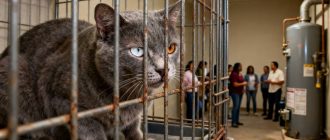
Sixty kilos of Fila Brasileiro lay in the ditch, and no one stopped.
I was walking home along the dirt road just as the sun was sinking behind the fields. I had missed my ride, missed the last bus, and my phone was nearly dead. All I wanted was to reach home, wash the dust off my face, and sit down in silence.
Then I saw the shape in the ditch.
At first, I thought it was a sack someone had thrown from a tractor. A gray, heavy-looking thing half buried in dust and dry grass. I nearly kept walking.
Then it breathed.
Not a bark. Not a growl. Just a tired exhale that lifted a tiny cloud of dust in front of its muzzle.
My heart climbed into my throat when I realized what it was.
A dog.
A huge one.
Thick paws like tree roots, a broad head, loose dirty skin, and the unmistakable heavy build of a Fila Brasileiro. My neighbor’s voice immediately echoed in my head:
“Never look those dogs in the eye. Don’t get close. Don’t trust them.”
I wanted to run. Fear was already turning my body away.
But the dog did not growl. He did not lift his head. He only lay there, staring at nothing, with eyes that seemed to have given up on the world.
I took one step.
Then another.
His ribs showed under the filthy skin. His fur was full of mud, burrs, and dried grass. Around his neck was an old collar, too tight and worn. He looked less like a dangerous animal and more like someone who had carried too much pain for too long.
I knelt in the dust a few meters away.
“Easy, big boy,” I whispered. “I’m scared too.”
I had a small bottle of water in my bag. I poured some into the cap and pushed it toward him with a stick. He moved his tongue once. Then again.
That was enough to make me stay.
I called the veterinary clinic in the nearest town. The woman on the phone asked:
“Is he aggressive?”
I looked at the giant body in the ditch.
“No,” I said. “He is dying.”
She promised to send help.
While I waited, three vehicles passed. One man slowed down, rolled down his window, and shouted:
“Lady, get away from that thing! If he gets up, you’re finished.”
“If he could get up,” I answered, “he wouldn’t still be lying here.”
The man shook his head.
“Not your problem.”
I looked back at the dog.
“That’s what everyone else decided.”
He drove away.
The evening grew darker. Mosquitoes bit my arms. Dust stuck to my knees. I took off my light jacket and laid it carefully over the dog’s back. He opened his eyes again. Amber eyes. Exhausted, dull, but not angry.
When the vet finally arrived with two volunteers, they moved slowly and spoke softly. It took all of us to lift him onto the stretcher. He was terribly weak, but still heavy, still powerful, still enormous.
“No chip,” the vet said. “Dehydrated. Starved. Old marks from being chained. Someone left him here.”
I swallowed hard.
“Will he live?”
“If you had walked past him,” she said, “probably not.”
At the clinic, they named him Bento.
I thought I would go home and forget. But the next day, I called. The day after, I went to see him. Then again. And again.
At first, Bento only watched me. He did not wag his tail. He did not trust hands. When a man spoke too loudly, his whole body trembled.
But one afternoon, while I sat beside his kennel telling him about my boring day, he slowly moved his massive head and rested it against my palm.
The vet smiled.
“He remembers you.”
“I didn’t do much.”
“You stayed. For a dog like him, that is everything.”
Weeks passed. Bento gained weight. His wounds healed. His eyes changed first. They stopped looking at the world as if it had already betrayed him.
When the clinic asked if I knew anyone who could foster him, I heard myself say:
“I can take him for a few days.”
A few days became a month.
A month became forever.
People in the neighborhood were afraid at first.
“A woman alone with a dog that size?”
“Are you crazy?”
“You don’t know what he might do.”
But Bento never did what they feared.
He walked slowly beside me. Slept near the front door. Waited for permission before entering the kitchen. Lowered his head when I spoke gently. He was not dangerous. He was careful. There is a difference.
One evening, months later, I came home from the small market with bread and milk in my bag. Near my gate stood a drunk man I did not know. He smiled in a way that made my stomach turn and stepped too close.
“Why so fast, pretty lady?”
My hands shook. I could not get the key into the gate.
Then Bento appeared from the porch.
He did not attack.
He did not bark wildly.
He simply stepped between us.
Sixty kilos of silence.
The man looked at him, lost his smile, and backed away.
That night I sat on the porch floor with my arms around Bento’s neck. He sighed, the same soft breath I had heard in the ditch.
Only this time, it did not sound like giving up.
It sounded like home.
I thought I had saved a dog no one wanted to see.
But Bento saved something in me too — the part that still knew compassion must be stronger than fear.