My mother waited until she was dying to tell me the truth.
For eight days, I sat beside her bed in the little farmhouse where I had grown up. The doctor said her heart was tired. The hospice nurse said hearing is often the last thing to go. So I talked to her about ordinary things: the weather, the roof repair, the neighbor’s dog, anything but goodbye.
Then one evening she opened her eyes and said:
“Daniel, I had a daughter.”
I almost dropped the glass of water in my hand.
Her name had been Lily. She was a year old when my father died in a logging accident. I had been sixteen and away at school. My mother had been poor, grieving, and terrified. She took the baby to a state children’s home, signed papers, and told herself she would return when life became bearable.
Life became bearable.
She did not return.
“I was ashamed,” she whispered. “Then too ashamed to undo it.”
I could not comfort her. Some truths do not deserve comfort. But she gripped my hand and begged me to find the child she had abandoned.
“She may hate me,” she said. “Let her. But don’t let her remain a secret.”
I promised.
After the funeral, I found the only clue in a cookie tin under her bed: a children’s home record with a case number and the name Lily. No photograph. No address. Just proof that my mother’s confession had not been fever.
The search changed me.
I learned how much of a person can disappear into paperwork. I called agencies, wrote letters, waited for permissions, followed names that led nowhere. Finally, an old caseworker remembered the adoption.
Lily had become Rachel.
Rachel Ellis lived in Maine and owned a small flower shop.
I wrote first. She answered with two sentences.
“I knew I was adopted. I did not know anyone was looking.”
We met on a rainy afternoon. She arrived carrying no flowers, only a brown envelope of her own documents. She was careful, not cold. There is a difference.
“Did she love me?” Rachel asked.
I had prepared many answers. None survived the question.
“I think she did,” I said. “But not bravely enough.”
Rachel looked down.
“That is probably the most honest thing anyone has ever told me about her.”
I gave her my mother’s final note. Rachel read it without tears. Then she folded it and put it in her coat pocket.
“She doesn’t get to be forgiven just because she died,” she said.
“No,” I replied. “She doesn’t.”
Months later, Rachel asked to see the grave. She stood there a long time, then placed a small bundle of lavender on the stone.
“I’m not here as her daughter,” she said. “Not yet. I’m here as the woman who survived being left.”
I nodded.
We kept in touch.
Carefully.
Slowly.
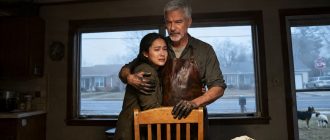
One year later, Rachel came to the farmhouse. She walked through the kitchen, touched the old table, and smiled sadly.
“I spent my whole life wondering where I began,” she said.
I answered, “You can begin again wherever you want.”
She looked at me then, really looked.
“Maybe with a brother.”
My mother’s secret had stolen forty years.
Her last request did not repair them.
But it opened a door before the rest of us were buried behind it.