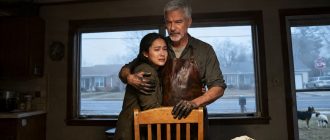
When I found out I was pregnant six months later, I locked myself in the bathroom and cried for an hour. Not from joy. From terror. He knocked on that door until his knuckles were raw, and when I finally opened it, red-faced and shaking, he just wrapped his arms around me and whispered into my hair, “Alright, Lila. Alright. We’re gonna build something here.” We got married at the county courthouse on a Tuesday. I wore a yellow sundress. He borrowed a tie from the bailiff.
For a while, it worked. He quit the garage and got a job driving for a medical supply company—steady hours, benefits. I picked up night shifts waiting tables at a diner off I-45. We rented a tiny garage apartment that smelled permanently of grease and fried onions. We were bone-tired all the time, scraping change for formula and diapers, but when Silas held our son Cole in those big callused hands, something in his face went soft and reverent, like he was holding scripture. He’d carry that baby around the apartment at three in the morning, humming that same damn song he’d mentioned the night we met.
Then the bills got bigger, and Silas decided he needed to earn real money. He took a long-haul trucking job, the kind where he’d be gone three weeks out of every month. He promised it was temporary. For the family. I believed him because I needed to.
Cole learned to walk while Silas was somewhere outside of Albuquerque. Cole started kindergarten while Silas was stuck in a snowstorm in Nebraska. Every time he came home, the gap was wider. He’d sit at the dinner table staring at his phone, jaw tight. Stopped asking about my day. Stopped reaching for me in the dark. I kept telling myself it was exhaustion, road fatigue, the weight of providing. I told myself a thousand pretty lies before I finally tripped over the ugly truth.
A receipt fell out of his duffel bag one Sunday morning. A hotel in Waco, king-size bed, pay-per-view movie, two dinners from room service. He’d told me he was in Oklahoma that weekend. I remember standing in the laundry room with that little slip of paper in my hand, and the world just went mute. The hum of the dryer, the birds outside, my own heartbeat—everything swallowed into cotton.
I confronted him that night after Cole was asleep. He didn’t bother to lie. Just leaned against the kitchen counter with his arms crossed and watched me come apart. That was the worst part—the watching. Like I was a TV show he’d already seen.
“Her name is Julie,” he said. “She works dispatch out of Temple. And I’m sorry, Lila, but I’m not coming back this time.”
He packed his bag while I stood in the doorway of our bedroom. I kept waiting for him to fumble a shirt, to hesitate, to turn around with that soft look he used to have. But he zipped the duffel without a single wasted motion and walked right past me like I was part of the furniture. The front door clicked shut, and the sound of it was so small for something that destroyed everything.
Cole was fourteen. He found me sitting on the kitchen floor at two in the morning, still clutching that receipt. I didn’t have to explain. He just looked at the duffel bag gone from the hall closet and his father’s keys missing from the hook, and something in his jaw set like concrete. He never cried. Not once. He just said, “He’s dead to me,” and went back to his room. That boy locked a door inside himself that night, and I’ve never seen him open it since.
The years rolled on. Cole finished high school, then trade school. Became a diesel mechanic—a damn good one. He met a girl named Savannah with a laugh that filled a room, and they got married under a big oak tree at her parents’ farm. Two hundred guests, barbecue and bluegrass, mason jars full of sweet tea. He didn’t invite Silas. His own father didn’t exist on the guest list. Didn’t exist in the toasts, the photographs, or the first dance. Cole’s best man mentioned something about “the strong women who raised him,” and I had to bite my lip so hard it bruised.
Now Cole has a son of his own. My grandson, Emmett. He’s got Silas’s eyes—that exact shade of hazel that shifts green when he’s tired—and it guts me every time I see them. Cole pretends he doesn’t notice. He’s never once spoken his father’s name in front of the boy.
But Silas has been calling.
Three times in the last month, my phone buzzes with an unfamiliar number, and when I answer, it’s that same voice, rougher now, slower. Julie left him two years ago—apparently the excitement of stealing another woman’s husband wore off once she realized he still left his socks on the floor. He’s living in a rented room outside Tyler, driving a delivery van for a bakery. He wants to see Emmett. Wants to “make things right.” Wants forgiveness.
I told him I’d think about it. I told Cole, too, last Sunday over pot roast.
Cole set his fork down very carefully. “He’s not setting foot near my son.”
“He’s your father.”
“He’s a stranger who broke my mother.” His voice was flat as a two-by-four. “He made his choice. Now he gets to live with it.”
I didn’t push. I know better. That door Cole locked at fourteen is still bolted shut, and I’m not the one who holds the key. But I can’t stop thinking about it. About Silas’s voice on the phone, the way it cracked when he said Emmett’s name. About the boy who hummed to me in a steaming parking lot and held our newborn like something holy. About the man who destroyed me, and the ghost of the man I loved who still somewhere exists underneath.
Last night I dreamed I was standing in that garage apartment again, and someone was knocking on the door. I woke up with my heart hammering, staring at the ceiling, listening. The house was dead quiet. Of course it was. Nobody’s been knocking for twenty years.
But I still listen. Every single night.
—
Silas showed up six weeks later, unannounced, on a drizzly Tuesday afternoon.
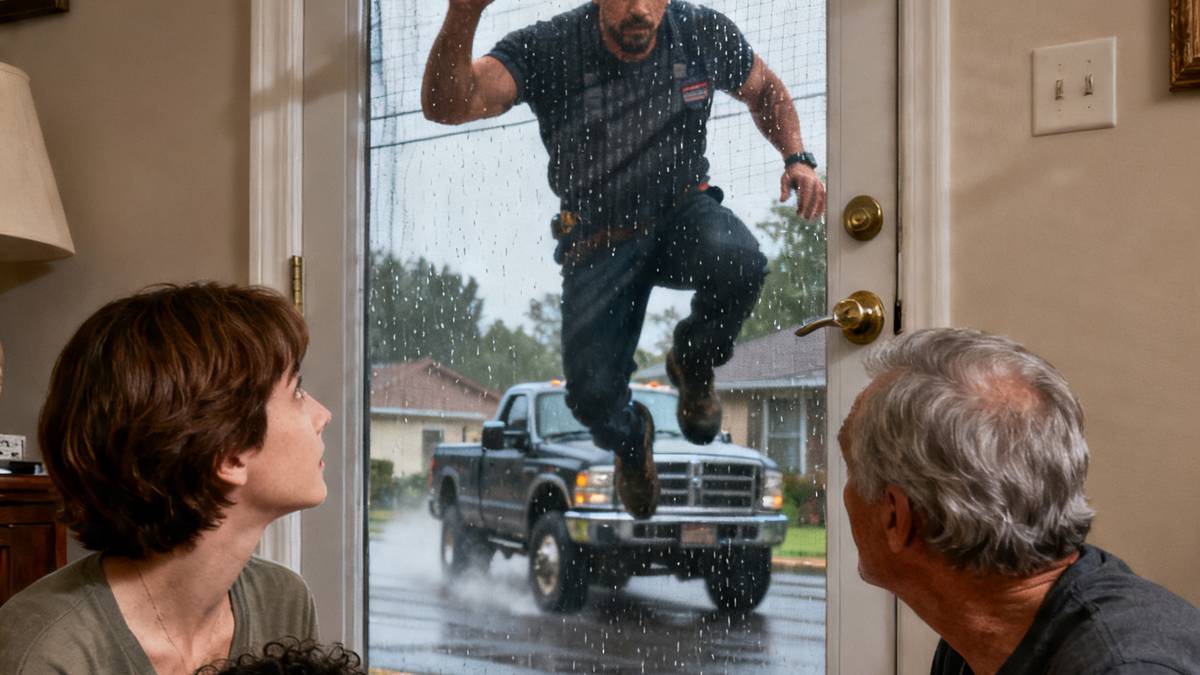
I was watching Emmett while Savannah ran errands. We were on the living room floor building something structurally questionable out of Legos when a shadow fell across the screen door. I looked up, and there he was—older, grayer, thinner in the jaw. Same eyes, though. Emmett’s eyes.
“Lila.” His voice was hoarse. “I know I shouldn’t be here. I just… I needed to see him. Please.”
Emmett looked up from his Legos, curious, and I saw Silas’s whole face collapse into something raw and desperate. He pressed his palm flat against the screen mesh like he was trying to reach through a prison barrier.
“Is that…?”
Before I could answer, a truck roared into the driveway. Cole.
He must have seen Silas’s bakery van on the street. He was out of the cab before the engine died, boots pounding up the porch steps, and the look on his face was something I’d never seen before—not anger, exactly. Harder. Colder. A son who’d spent twenty years building a fortress, and here was the enemy at the gate.
“Get away from that door.”
Silas turned. “Cole. Son, I just want five minutes. I want to explain—”
“Explain what?” Cole’s voice didn’t rise. It dropped, dangerously calm. “Explain how you abandoned us? How you traded your family for a dispatcher from Temple? I was fourteen years old, Silas. I found my mother on the kitchen floor. You don’t get to explain anything.”
Silas stepped back from the door, hands raised, and for one flickering second I saw the young man from the borrowed tie and the county courthouse. “I was wrong. I was stupid and selfish and wrong. I have regretted that night every single day since I walked out. I know I can’t fix it. I know I can’t get those years back. But that little boy in there—” his voice broke, “—he’s my grandson. Please. I’m begging you.”
“No.” Cole planted himself squarely between his father and the screen door, boots set wide. “You didn’t come to my wedding. You won’t be in my son’s life. You know why? Because respect isn’t a right—it’s something you earn. And you spent every single day of the last two decades proving you don’t deserve an ounce of it from me.”
Silas’s shoulders sagged. He looked at me then, past Cole’s shoulder, and his eyes were wet. A question. A plea. Can’t you say something?
I thought about the receipt in the laundry room. The click of the front door. The years of silence. And then I thought about the three-in-the-morning humming, the callused hands, the yellow sundress.
“I don’t hate you, Silas,” I said quietly. “I stopped a long time ago. Hate takes energy I don’t have anymore. But Cole’s made his choice. And I stand with my son.”
Something in him crumbled. He nodded once, slowly, and wiped his face with the back of his sleeve. “Alright. Alright.” He took one last look at the screen door, at the small shape of Emmett still sitting puzzled among the Legos, and then he walked down the steps and back to his van.
Cole didn’t move until the engine faded down the street. Then he turned, scooped Emmett up onto his hip, and looked at me with that same concrete jaw.
“You okay, Mom?”
I was staring at the empty driveway. At the wet tire tracks slowly filling with drizzle. “Yeah, baby. I’m okay.”
That night, alone in my house, I walked to the front door and stood there in the dark. Hand resting on the knob. Just listening. The rain had stopped, and the street was silent.
I didn’t turn the lock. Didn’t open it. I just stood there for a long time, breathing slow, and finally let my hand drop to my side.
The ghost was gone. Finally, after all these years, nobody was out there knocking.